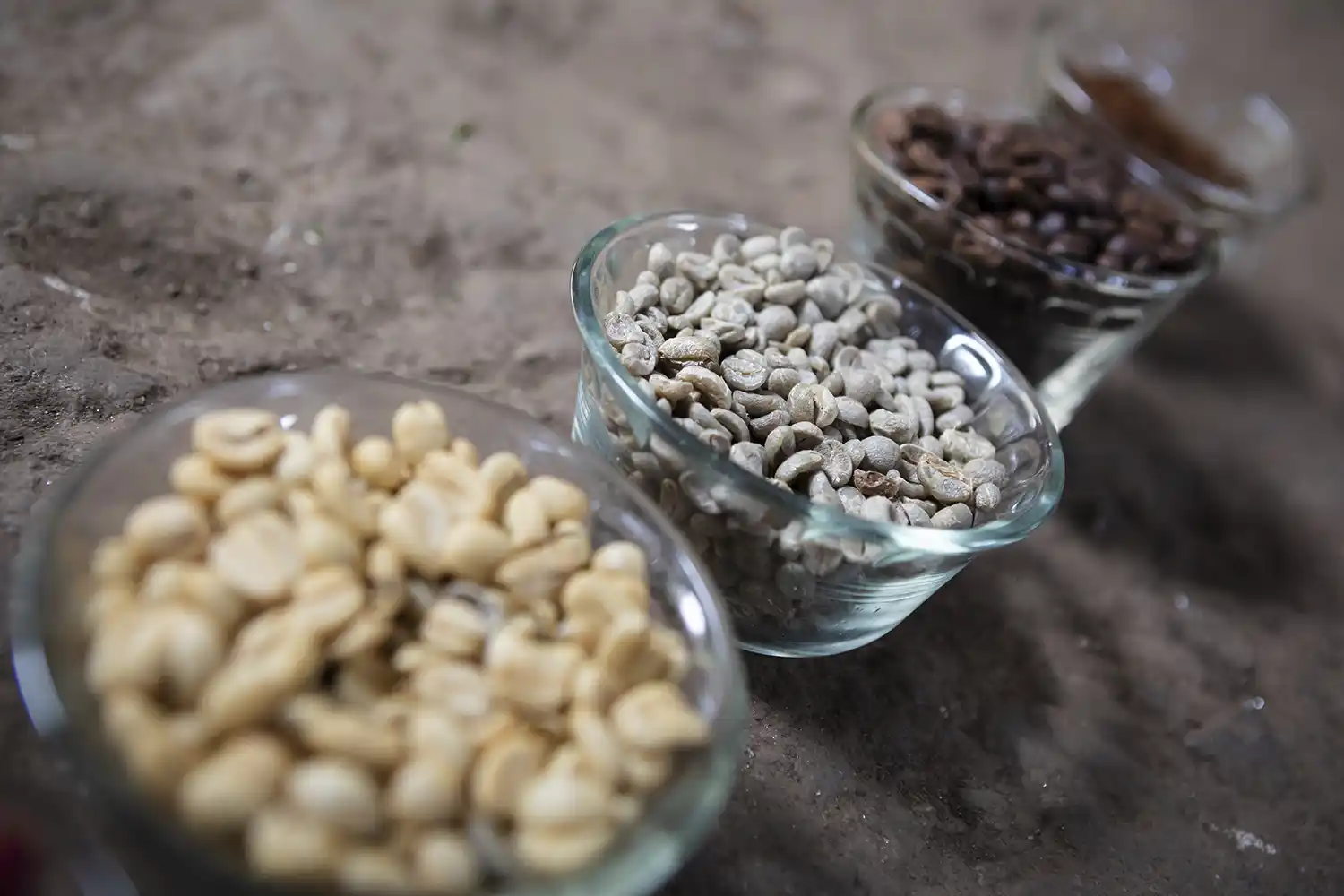
Fall flavor is often treated like an ingredient list: cinnamon, caramel, maple, chocolate, and maybe a little clove. Those flavors are familiar for a reason, but they do not always have to come from a bottle.
Green coffee can bring its own version of the season. Some coffees suggest cocoa and toasted nuts. Others lean toward dried fruit, brown sugar, or warm spice. Choose with those qualities in mind, then roast to make them easier to taste.
The result will not taste like a flavored coffee. It will taste like coffee with a natural connection to the foods and drinks people already enjoy this time of year.
Start With the Flavor You Want
Origin names are useful, but the cup profile is the better starting point for a seasonal menu. Ask what role the coffee needs to play.
Do you want a soft, chocolate-forward cup for morning drip? A heavier coffee that stands up to cream? A fruitier option for customers who enjoy more complexity? The answer will help you narrow the field faster than shopping by country alone.
Look for descriptions that mention:
- Chocolate, cocoa, or cacao
- Almond, hazelnut, or toasted nut
- Caramel, brown sugar, or molasses
- Raisin, fig, plum, or other dried fruit
- Baking spice, cedar, or earthy sweetness
Tasting notes are a guide, not a guarantee. Roast level, brewing, water, and your own palate all affect what shows up in the cup.
For Chocolate and Nut Flavors
Brazilian coffees are often a comfortable place to begin when you want lower perceived acidity, round body, and flavors that suggest chocolate or nuts. Those qualities work naturally with pastries, milk, and the warmer menu people expect in October.
A balanced Central or South American coffee can fill a similar role. Roast it far enough to develop sweetness, but do not assume darker is always better. If the roast character takes over, the chocolate note can move from smooth cocoa toward bitterness.
Taste the coffee black first. Then add a small amount of milk and taste again. A coffee that stays present in both cups gives you more ways to use it.
For Dried Fruit and Spice
Natural-process coffees and some full-bodied origins can bring deeper fruit notes that feel right at home in fall. Think blueberry, raisin, plum, or wine-like fruit rather than the crisp citrus of a bright washed coffee.
Indonesian coffees can add another direction with body, earth, cedar, herb, or spice. These coffees can be especially satisfying in a French press or as part of a blend, where their depth supports a sweeter component.
The key is balance. A distinctive coffee can add character without becoming the entire story.
Build a Two-Coffee Seasonal Blend
You do not need a complicated recipe to explore blending. Start with two coffees that have clear jobs.
Use a sweet, approachable coffee as the base, then add a smaller portion of a coffee with more body, dried fruit, or spice. A Build-A-Box assortment can make this kind of side-by-side exploration easier. Roast and taste a small trial before committing to production volume.
Keep the first blend ratio simple, such as three parts base coffee to one part accent coffee. If the accent disappears, increase it in a measured step. If it dominates, move the other way. Record every version.
Whether you roast the components together or separately depends on how similarly they develop and how much control you need. When the beans differ greatly in density or size, roasting separately can make evaluation easier. If you are still learning the coffees, separate test roasts show what each component contributes.
Use Plain Language at the Counter
Seasonal coffee descriptions do not need to sound like a tasting exam. Tell customers what the coffee reminds you of and how it feels in the cup.
“Round and chocolatey with a dried-fruit finish” is clear. So is “full-bodied, low in sharp acidity, and especially good with milk.” That language helps someone choose a coffee without promising a literal chocolate or raisin flavor.
If you add nothing to the beans, say so. Customers sometimes read “maple” or “cocoa” as added flavoring. A short note such as “natural tasting notes, no flavoring added” removes the confusion.
Let the Coffee Set the Season
A seasonal roast does not need a novelty name or a long list of spices. It needs a flavor direction, a thoughtful roast, and a reason to be on the menu now.
Begin with what is already in the green coffee. You may find that fall was there all along.