Starting a coffee roasting business takes more than choosing a machine. You need customers to serve, a workable production schedule, and a clear picture of what each bag costs to produce. A small operation can begin with a focused coffee menu and grow as repeat orders become more predictable.
Use this checklist to plan your first steps, whether you’re adding roasted coffee to an existing café or building a business around bagged coffee.
1. Decide who you will sell to
Start with one primary customer group. Selling bags through your café, fulfilling online orders, and supplying other businesses each create different demands on pricing, packaging, and delivery.
- Café customers: Plan for both beverage service and retail bags.
- Direct retail customers: Include order packing, shipping, and customer service in your schedule.
- Wholesale customers: Discuss expected quantities, delivery frequency, and payment arrangements before planning production.
Talk to prospective buyers before building a large inventory. Record what they want, how much they expect to purchase, and how often they would reorder. Separate confirmed demand from your growth goals.
2. Turn demand into a weekly roasting plan
Estimate the finished roasted coffee you need each week, then work backward to green coffee purchases and roasting sessions.
For example, selling forty 12-ounce bags requires 30 pounds of roasted coffee. That example excludes samples, production losses, and any coffee used for drinks. Add those needs separately.
Measure roast yield by dividing finished roasted weight by starting green weight. Use that yield to estimate the green coffee needed for your target. Keep green pounds, roasted pounds, and retail bag sizes clearly separated in your records.
Schedule time for weighing, roasting, cooling, cleaning, tasting, packaging, and fulfillment. A machine’s batch capacity alone does not tell you how many customer orders your team can complete in a day.
3. Build a startup budget before buying equipment
Your budget should cover getting ready to roast and keeping the business running while sales develop. Gather quotes for your actual location and operating plan instead of relying on a single generic startup-cost figure.
| Budget area | What to include |
|---|---|
| Equipment and setup | Roaster, delivery, installation, venting, scales, work surfaces, and packaging equipment. |
| Opening inventory | Green coffee, bags, labels, shipping cartons, and tasting supplies. |
| Operating costs | Labor, space, utilities, maintenance, insurance, and administrative expenses. |
| Selling and fulfillment | Payment processing, website or marketplace costs, packing time, shipping, and deliveries. |
| Cash reserve | Funds for reorders, unexpected expenses, and periods when sales arrive more slowly than planned. |
Keep one-time purchases separate from recurring expenses. Include your own working time when comparing possible pricing and production schedules.
4. Choose a roaster that fits the plan
Compare batch size, available working space, fuel and power requirements, maintenance access, and the controls your team will use. Think about your first realistic production target as well as the next stage of growth.
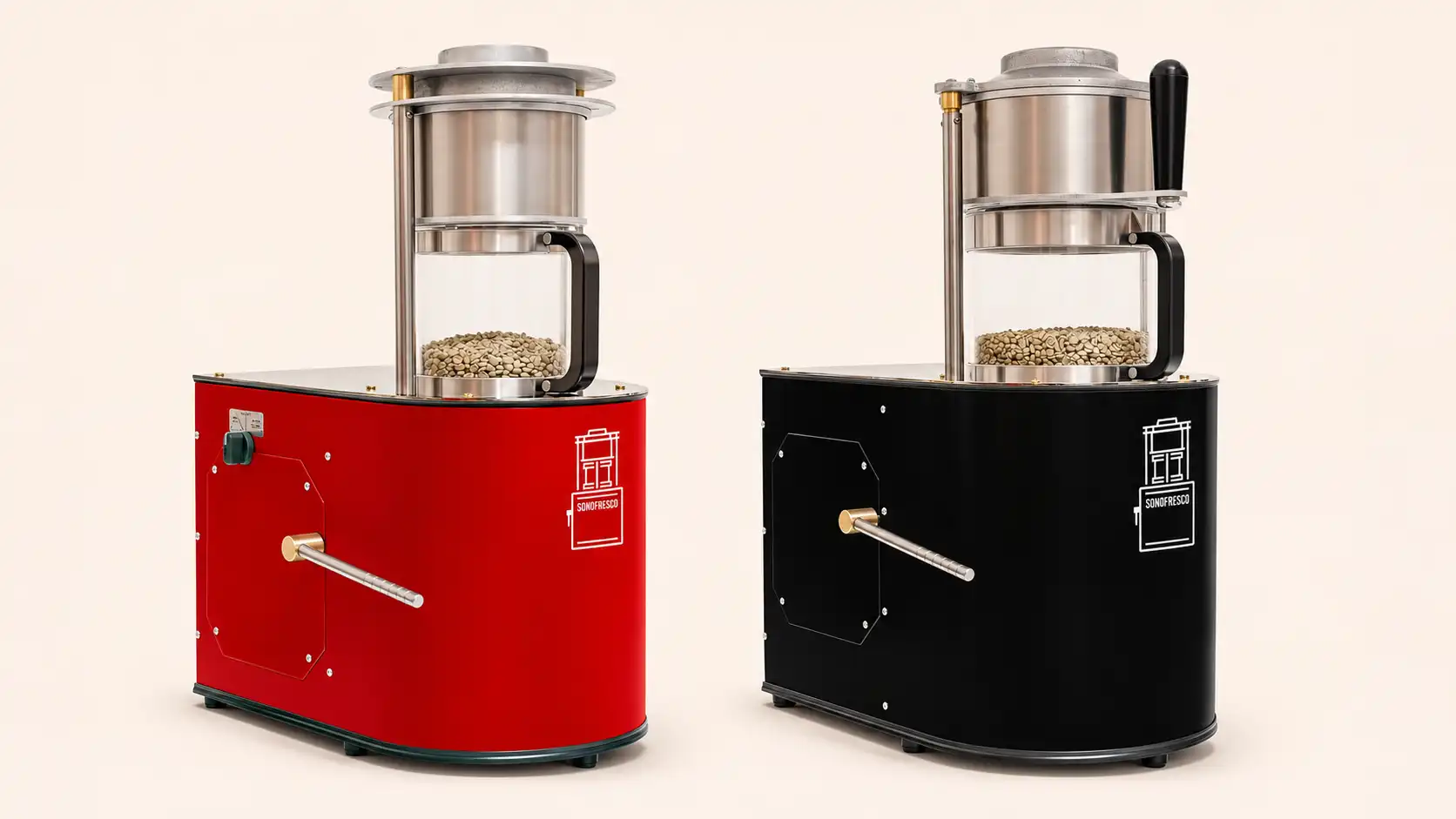
Sonofresco offers 1 lb and 2 lb commercial fluid-bed roasters. Our small-batch commercial roaster buying guide explains the model differences and green coffee input capacities. Visit the roaster product page for current configurations and pricing.
5. Plan your workspace and installation
Map the path from receiving green coffee to storing finished bags. Leave practical working space for loading, cleaning, packaging, and moving stock.
Before committing to a location, confirm that it can support the intended roasting operation. Discuss ventilation, fuel, electrical service, and installation with qualified professionals, and check applicable business and food-production requirements with the authorities responsible for your location.
Use the Sonofresco manuals and venting options as starting points for the installation discussion.
6. Start with a focused coffee menu
A manageable menu gives you time to learn each coffee and build repeatable production habits. Choose coffees for the customers you intend to serve, then test the results through their likely brewing methods.
Keep a record for each batch: coffee identity, green weight, roast settings, finished weight, roast date, and tasting notes. Use those records to investigate changes and repeat batches that customers enjoy.
Our green coffee selection guide can help you compare ordering options. Browse the current green coffee catalog for individual coffees and availability.
7. Work out the cost of a finished bag
Calculate green coffee cost using your measured roast yield, then add packaging, production labor, utilities, and applicable selling costs. Account for overhead separately so you understand what remains after the costs of running the business.
Keep the units consistent: a selling price per 12-ounce bag cannot be compared directly with a cost per pound.
Use the Sonofresco roasting profit calculator to explore volume, coffee cost, selling price, and roast-yield assumptions. Treat its results as estimates. Review which expenses it includes and add any costs from your budget that are not represented before making a purchasing decision.
8. Launch, measure, and adjust
Begin with a production schedule you can fulfill consistently. Track actual orders, repeat purchases, unsold inventory, working hours, and customer feedback. Update your budget with real costs instead of leaving your original assumptions in place.
Before expanding the menu or buying more capacity, identify the constraint: customer demand, roasting time, packaging, or fulfillment. Solving the right problem helps you grow with a clearer plan.
Your first planning checklist
- Define your first customer group and sales channel.
- Estimate weekly demand in pounds of finished roasted coffee.
- Gather equipment, installation, inventory, and operating-cost estimates.
- Confirm the workspace and installation requirements.
- Choose a small opening menu and document test roasts.
- Calculate costs using the same units as your selling prices.
- Set a realistic production and delivery schedule.
Ready to discuss equipment? Contact Sonofresco with your weekly production target and installation plans, or compare our coffee roaster configurations.